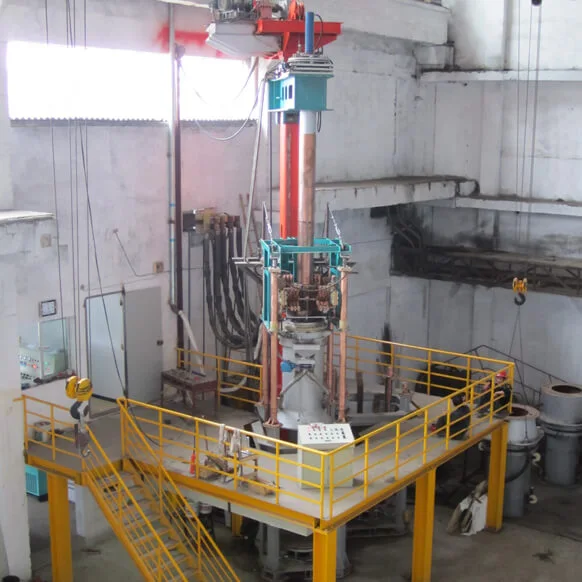
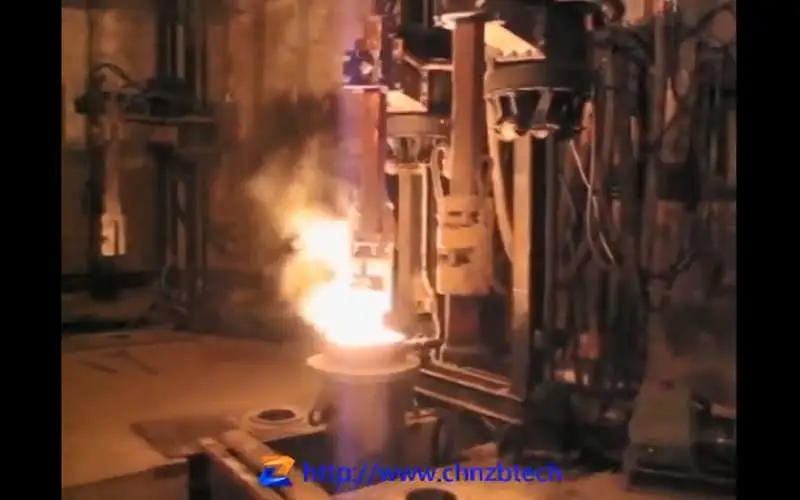
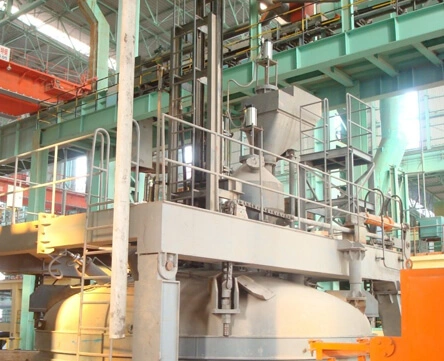
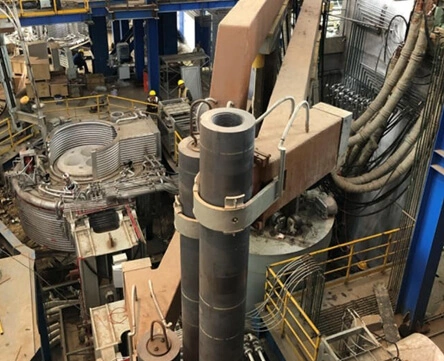
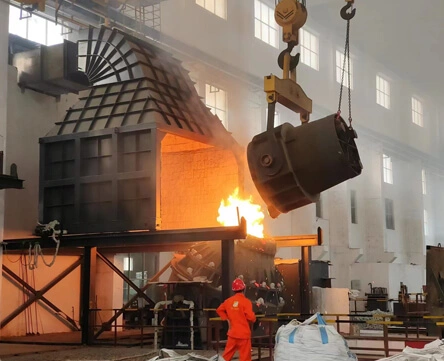
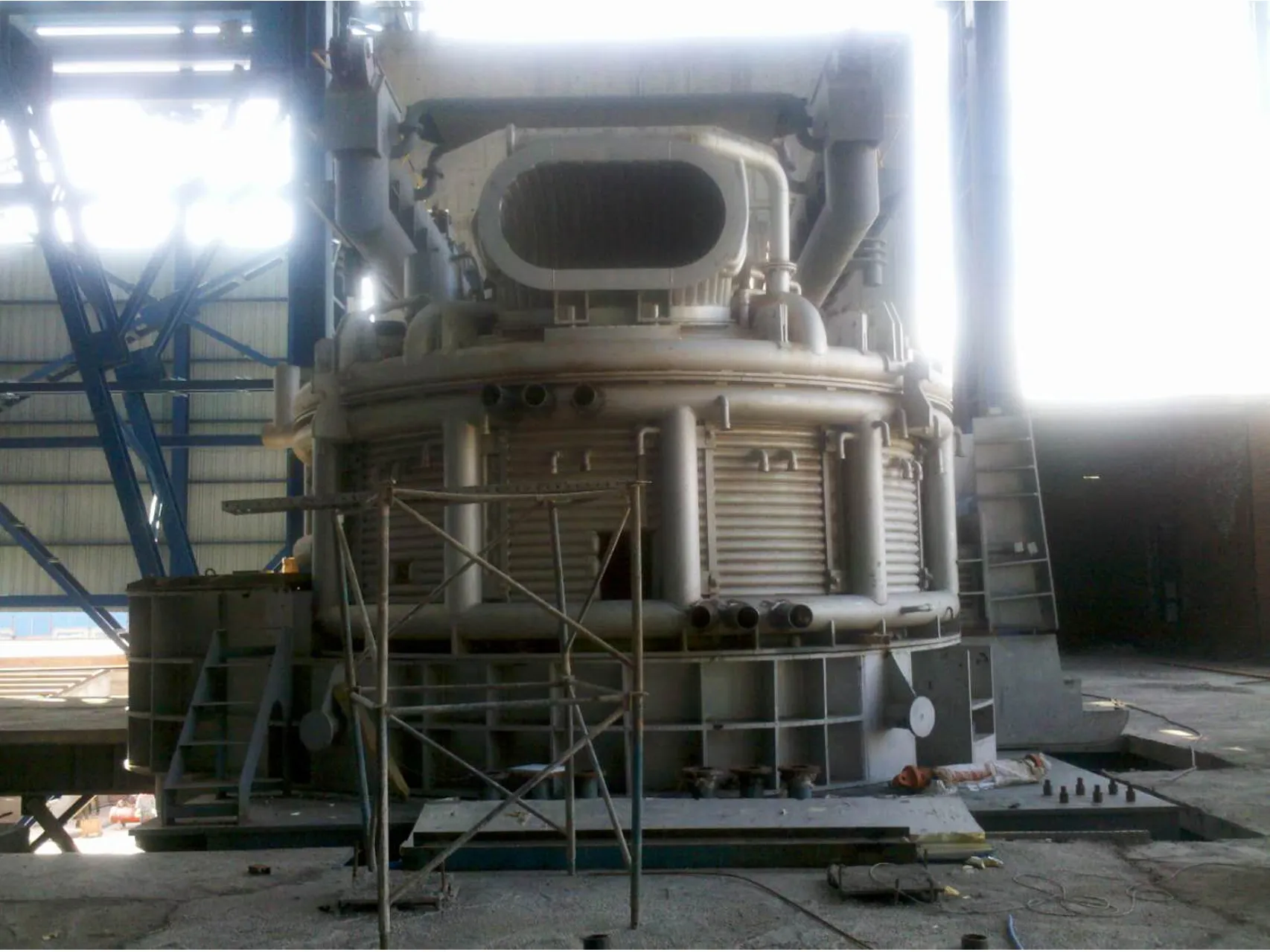
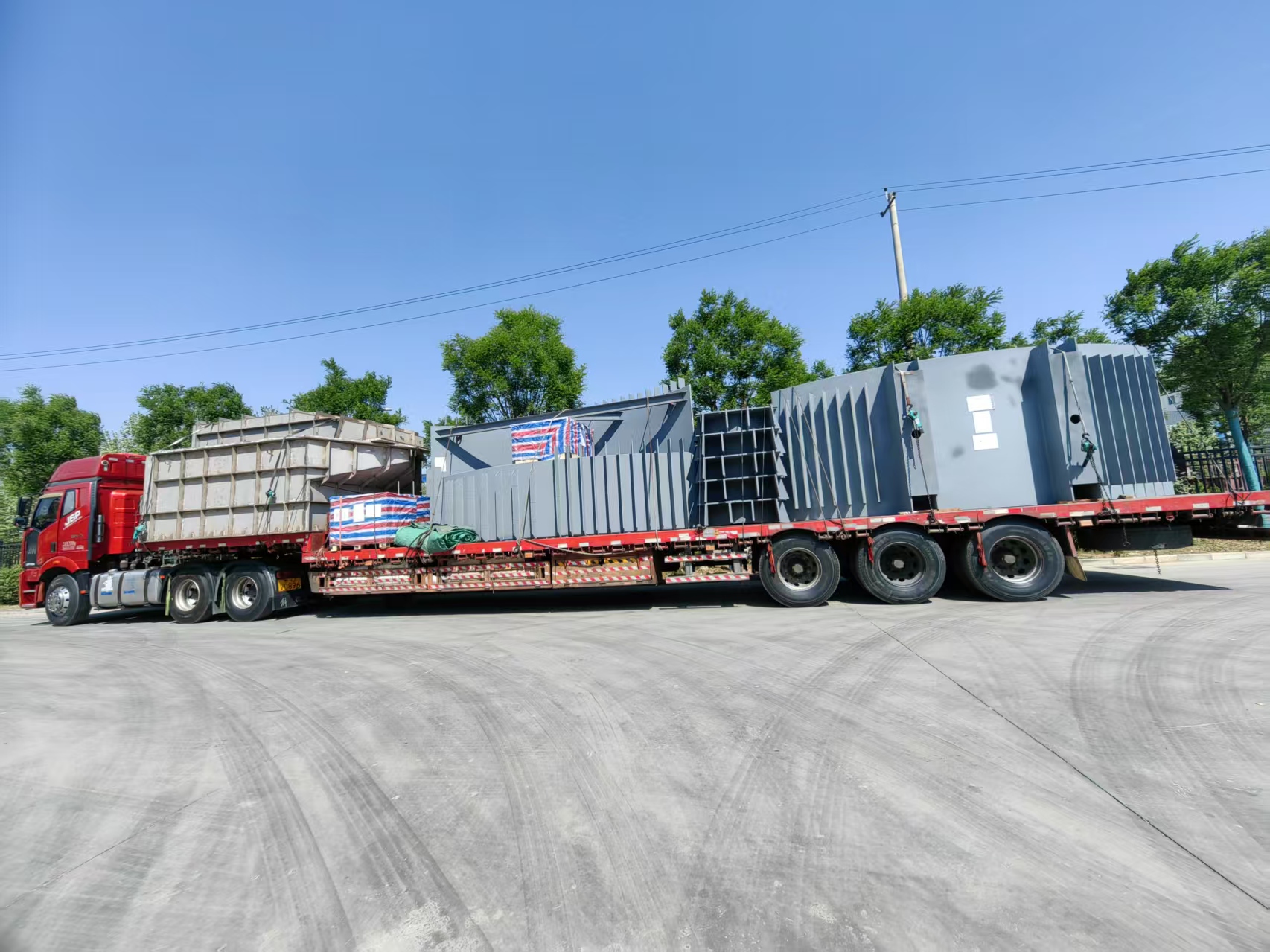
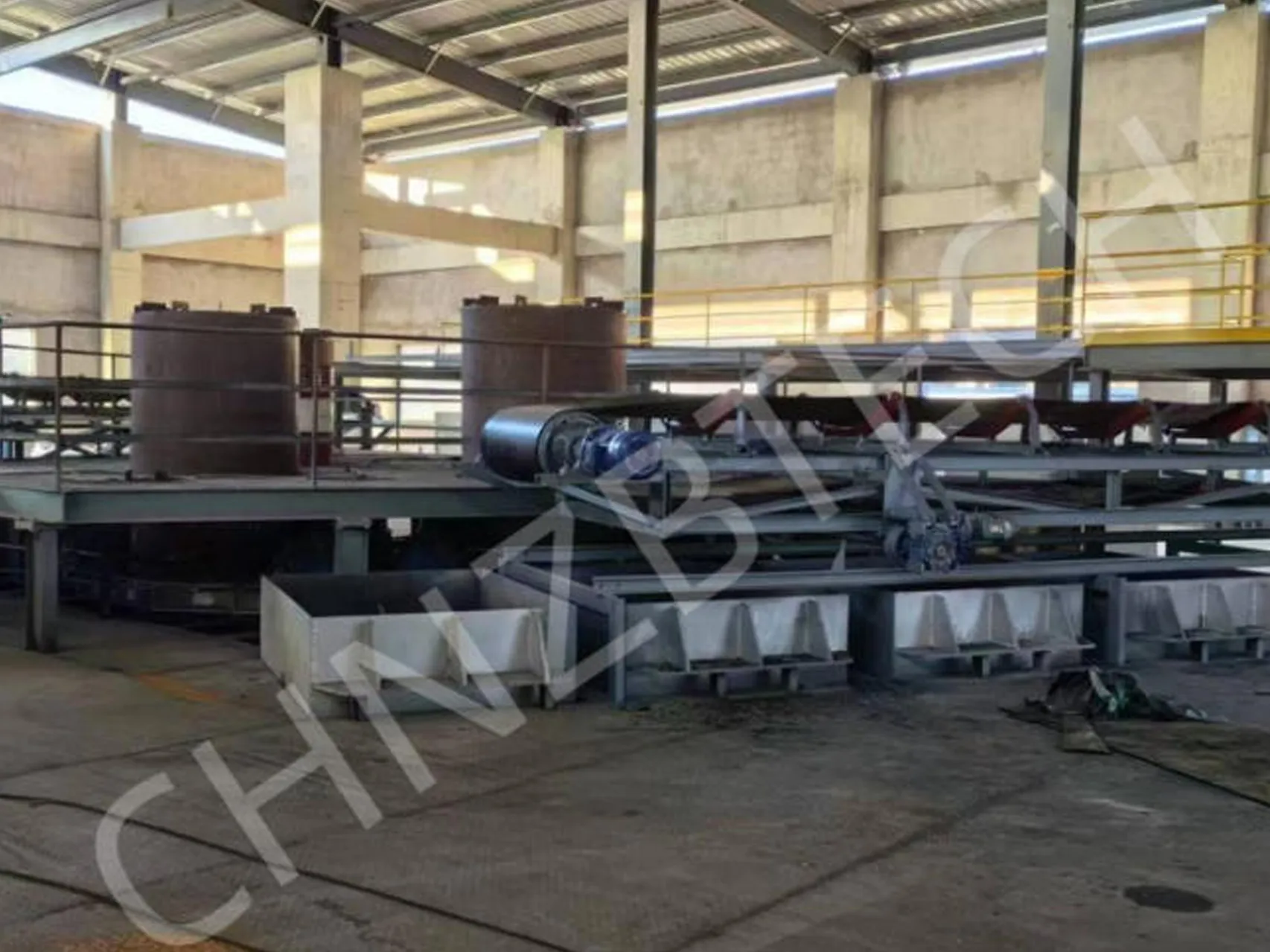
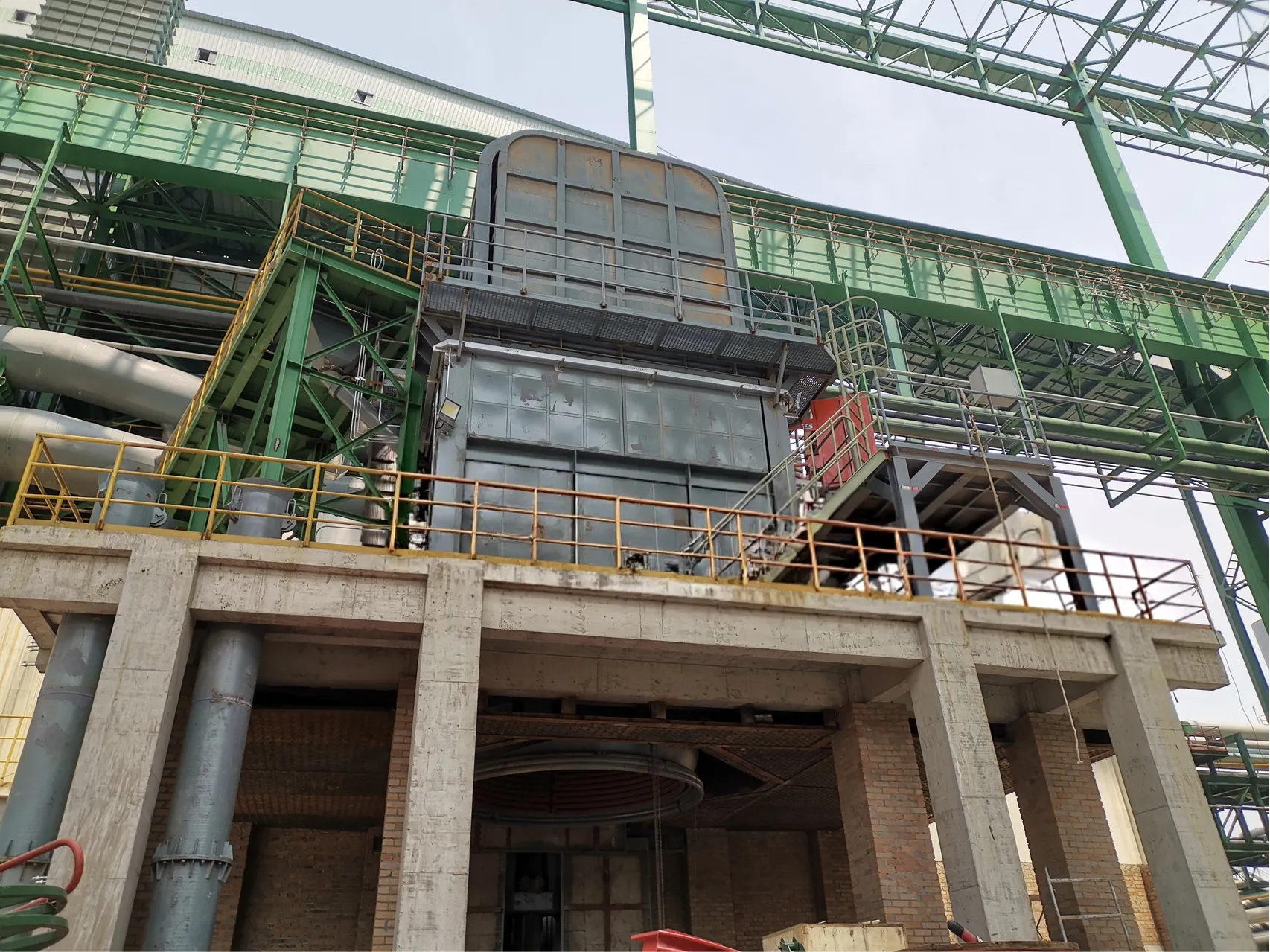
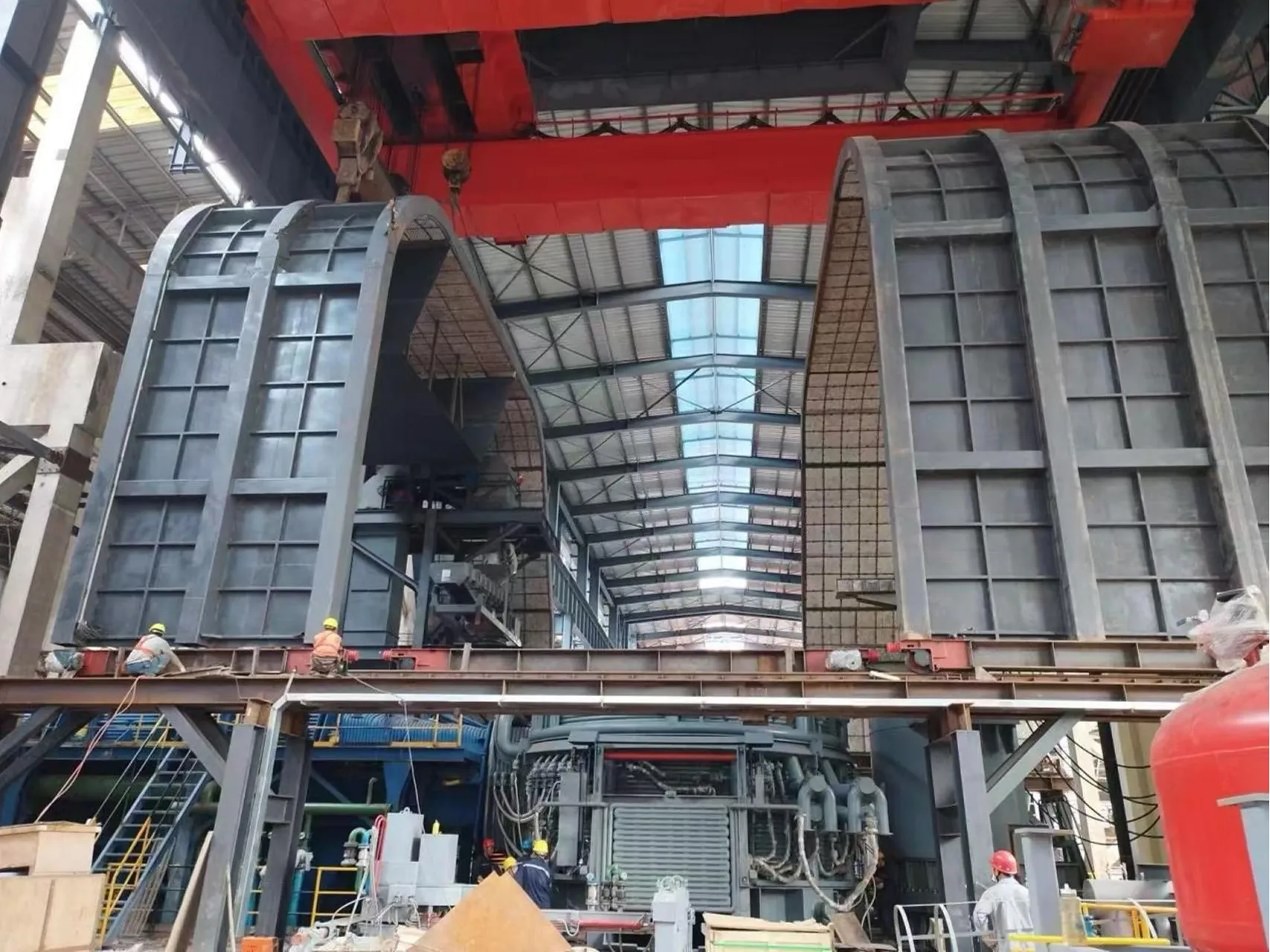
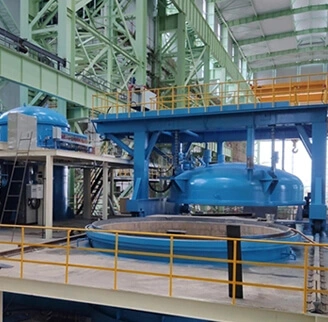
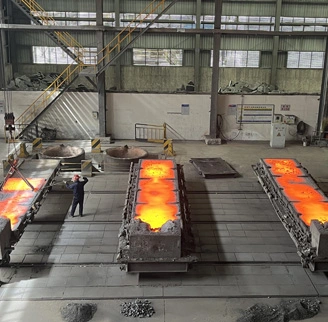
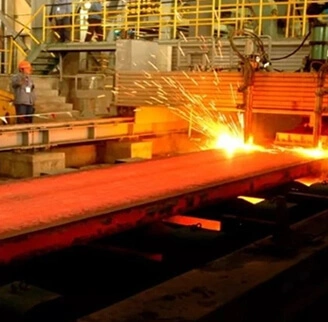
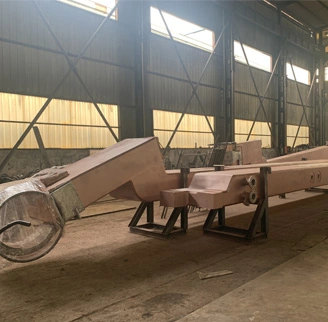
ESR furnace can be used for:
Die steels, Ball-bearing steels, Steels for turbine and generator shafts, Superalloys for aerospace and power turbines, Nickel-base alloys for the chemical industry, Cold rolls, High nitrogen steels melting.
Equipment composition
According to the power matching situation:
1. Busbar system
2. The electrode lifting mechanism is a column lifting type, with two driving methods: motor drive and hydraulic drive. The electrode arm is a new type of gold water cooled conductive cross arm
3. Fixed crystallizer mechanism
4. Fixed structure of bottom wooden box and steel ingot
5. Cooling water and its monitoring and alarm system
6. Hydraulic station and control valve system
7. Electrical control system
The electrical control system adopts a new type of variable frequency speed regulation - motor type regulator or microcomputer control, and can be configured with CRT display. The control and interlocking protection of various parts of the equipment are controlled by PLC.
Homogeneous, sound and directionally solidified structure
High degree of cleanliness
Free of internal flaws (e. g. hydrogen flakes)
Free of macro-segregation
Smooth ingot surface resulting in a high ingot yield
Parameter Category | Parameter Item | Unit | Typical Value (Small-Medium: 0.5-10t) | Notes/Remarks |
Basic Capacity & Ingot Specification | Nominal Melting Capacity | t | 0.5-10 | Rated weight of consumable electrode per heat |
Ingot Diameter Range | mm | 150-800 | Adjustable according to mold specification | |
Ingot Length Range | mm | 1000-4000 | Depends on furnace body height and ingot weight | |
Consumable Electrode Diameter | mm | 120-600 | Matched with ingot diameter (1:1.2-1.5 ratio) | |
Mold Type | - | Water-cooled copper mold | Ensures rapid solidification and uniform ingot structure | |
Electrical System | Transformer Rated Capacity | kVA | 500-6000 | Matched with melting current and voltage requirements |
Primary Input Voltage | kV | 10-35 | Compliant with industrial power grid standards | |
Secondary Output Voltage (Adjustable) | V | 20-80 | Stepless adjustment for stable slag melting | |
Melting Current Range | A | 5000-30000 | Determines heating power and melting rate | |
Power Supply Type | - | AC static frequency converter | Stable output, low harmonic pollution | |
Electrode Lifting Speed | mm/min | 0.5-10 | Automatically adjusted to maintain stable arc | |
Furnace Body & Structure | Furnace Body Height | mm | 3000-6000 | Adapts to ingot length and electrode lifting stroke |
Furnace Chamber Pressure | MPa | 0.05-0.2 (gauge pressure) | Protective atmosphere pressure, prevent oxidation | |
Melting Process Performance | Melting Rate | kg/h | 50-500 | Depends on power input and electrode size |
Specific Power Consumption | kWh/t | 800-1200 | Related to slag type and melting efficiency | |
Slag Consumption | kg/t | 30-80 | Slag used for purification and heat transfer | |
Ingot Solidification Rate | mm/min | 0.5-3 | Affects ingot structure and uniformity | |
Molten Steel Temperature | ℃ | 1550-1700 | Controlled to ensure complete melting and purification | |
Heat Cycle Time | h | 2-10 | Including melting, holding and solidification stages | |
Auxiliary System & Environmental Protection | Cooling Water Flow Rate | m³/h | 10-50 | Cools mold, furnace body and electrical components |
Cooling Water Inlet Temperature | ℃ | 15-30 | Ensures cooling efficiency and equipment safety | |
Dust Removal Efficiency | % | ≥99.5 | High-efficiency bag filter, meets emission standards | |
Control System | - | PLC + touch screen | Automatic control of current, voltage and electrode lifting | |
Product Quality Index | Ingot Purity (Oxygen Content) | ppm | ≤20 | Low oxygen content, high ingot purity |
Sulfur Content (After Remelting) | ppm | ≤50 | Slag has strong desulfurization capacity |