For automotive batteries, which are an indispensable supporting component for NEVs (even pure electric vehicles require a 12V lead‑acid auxiliary battery for start‑stop and control systems), the environmental performance of upstream lead smelting has become a top priority in automaker ESG audits.
For battery manufacturers, entering the NEV supply chain is no longer simply about having a "qualified product." They must now trace the lead smelting process backward. The lead refining furnace – the core equipment for producing refined lead – directly determines whether a battery plant can pass an automaker's ESG audit and secure supply contracts.
This article examines NEV ESG audit requirements, breaks down the core value of eco‑friendly lead refining furnaces, and explains why they have become the key to overcoming supply chain barriers and seizing the NEV market.
ESG Has Become an NEV Market Entry Threshold – Battery Supply Chains Are Upgrading
Unlike traditional internal combustion engine vehicles, NEVs impose stricter "green and low‑carbon" requirements, which cannot be met without tight control over the lead smelting stage. Today, leading NEV manufacturers have established clear ESG standards, especially for battery supply chains. They focus on verifying "the environmental performance of lead smelting, carbon emissions, and pollutant treatment capacity." Suppliers that fail to meet these standards are directly excluded from the supply chain.
Several small and medium‑sized battery plants have already been disqualified from NEV supply contracts because their upstream lead smelting processes failed emission standards or lacked complete environmental compliance documentation. This means that to partner with NEV makers and access premium markets, battery plants must upgrade at the source – choosing an eco‑friendly lead refining furnace to ensure that lead smelting complies with ESG requirements, achieving "green raw materials and compliant production."
For lead refining furnace manufacturers, this represents a core opportunity: the NEV industry's strict ESG enforcement is forcing battery plants to phase out traditional high‑pollution lead refining furnaces, creating a rigid demand for eco‑friendly equipment.
Recycled Lead's Low‑Carbon Profile Matches NEV Green Supply Chain Requirements
As the automotive scrappage peak arrives, the volume of decommissioned 12V auxiliary batteries from NEVs and scrap lead‑acid batteries from conventional vehicles has surged. Recycled lead has become the mainstream source of lead raw material, and the eco‑friendly lead refining furnace is the key equipment for achieving efficient, low‑carbon recycled lead smelting.
Compared to primary lead smelting, recycled lead smelting reduces carbon emissions by about 60% and energy consumption by 80% – perfectly aligning with NEV makers' ESG‑driven "green supply chain" requirements. The eco‑friendly lead refining furnace efficiently processes spent lead‑acid batteries (lead paste, grids, etc.) achieving a lead recovery rate of ≥98.5%. It solves the environmental challenge of waste battery disposal while providing battery plants with low‑cost, green, compliant lead raw material – a win‑win.
In short, the eco‑friendly lead refining furnace is not only a tool for battery plants to pass ESG audits but also a key enabler of the "full‑lifecycle low‑carbon" performance of NEVs, acting as a critical link between the recycled lead industry and the NEV supply chain.
Traditional Lead Furnaces Fail Emission Standards – Directly Disqualifying Battery Plants from Automaker Supply
Traditional lead furnaces typically use crude smelting methods without adequate environmental control systems. They suffer from excessive emissions of lead fume, lead dust, SO₂, and nitrogen oxides – failing both national environmental standards and NEV ESG audits.
To clearly show the gap between traditional and eco‑friendly lead refining furnaces, the table below compares their ESG suitability and explains why traditional furnaces are being eliminated from NEV supply chains.
| Comparison Aspect | Traditional Lead Refining Furnace | Eco‑Friendly Lead Refining Furnace | NEV ESG Audit Requirement |
|---|
| Pollutant emissions | Excessive lead fume/dust, no proper purification system, causes pollution | Equipped with high‑efficiency dust collection, lead fume purification, desulfurization & denitrification – near‑zero emissions | Emissions must meet ultra‑low standards, no environmental violations |
| Carbon emissions | High energy consumption, large carbon footprint per ton of lead | Regenerative combustion + waste heat recovery, 30–40% lower energy consumption, significantly reduced carbon emissions | Prefers low‑carbon smelting processes, drives supply chain carbon reduction |
| Recycled lead compatibility | Cannot efficiently process waste lead‑acid batteries, low recovery rate, resource waste | Handles lead paste, grids, etc. flexibly, recycled lead recovery rate ≥98.5%, circular resource use | Encourages resource recycling, prioritizes recycled lead raw materials |
| Compliance & traceability | No real‑time emission monitoring, cannot provide complete compliance documentation, non‑traceable | Equipped with online monitoring system, real‑time emission data upload, full production traceability | Requires full compliance documentation and traceable production data |
| Automaker suitability | Fails ESG audits → battery plant loses supply eligibility | Fully meets ESG audit standards → helps battery plant enter NEV supply chain | Only partners with compliant, green, low‑carbon suppliers |
How Eco‑Friendly Lead Refining Furnaces Achieve Low Energy, Low Fume, and Low Solid Waste Emissions
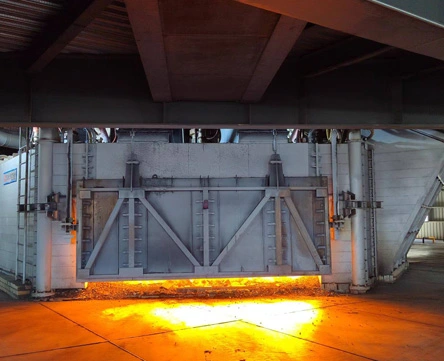
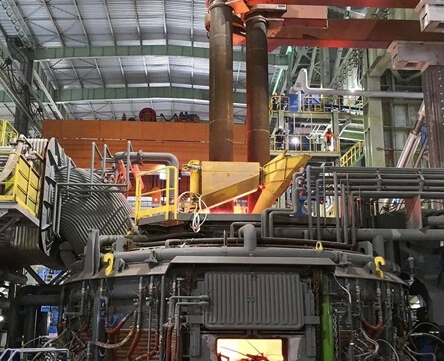
The eco‑friendly lead refining furnace has become a battery plant must‑have because of its comprehensive upgrades in design, process, and auxiliary systems – precisely matching NEV ESG audit requirements. It achieves "three lows" (low energy, low lead fume, low solid waste) while maintaining high refined lead purity, balancing environmental performance and product quality.
Low energy consumption: The furnace uses regenerative combustion technology to recover waste heat from the smelting process, significantly reducing energy consumption per ton of lead. Compared to traditional furnaces, energy consumption is cut by 30–40%, greatly reducing carbon emissions – meeting dual‑carbon and ESG low‑carbon requirements.
Low lead fume and low pollutant emissions: The system includes high‑efficiency pulse baghouse dust collectors, lead fume purification towers, and desulfurization/denitrification units. These capture lead dust and fume efficiently and remove SO₂, NOx, and other harmful gases, achieving near‑zero lead fume and dust emissions – fully compliant with national ultra‑low emission standards. Third‑party environmental test reports are available to satisfy automaker ESG audit compliance requirements.
Low solid waste emissions: The furnace optimizes slag‑lead separation, reducing solid waste generation during smelting. Any slag produced can be recycled, turning waste into resources and further improving resource circularity – aligning with the NEV industry's "resource circulation" ESG philosophy.
Additionally, the eco‑friendly lead refining furnace produces refined lead with purity ≥99.994% (4N grade) and impurity content ≤10 ppm, with strong batch‑to‑batch consistency – meeting the high‑purity requirements of NEV 12V auxiliary batteries. It delivers both environmental compliance and product quality.
Installing Compliant Refining Equipment Is a Critical Step to Passing ESG Audits
For automotive battery manufacturers, NEV ESG audits are not a paper exercise – they involve a full‑process verification of equipment, processes, data, and qualifications. The environmental configuration and compliance of the lead refining furnace are among the core audit items.
Today, more and more battery plants (such as Fengfan, Camel, Tianneng, etc.) are prioritizing eco‑friendly lead refining furnaces when upgrading their production lines – not only to meet national environmental policies but also to secure supplier status with NEV makers. Installing a compliant, eco‑friendly lead refining furnace ensures environmental compliance, traceable data, and a green, high‑purity lead raw material. It enhances product competitiveness, helps battery plants pass automaker ESG audits, and secures a place in premium supply chains.
We specialize in the R&D and manufacturing of eco‑friendly lead refining furnaces, precisely engineered to meet NEV ESG requirements. Our equipment delivers low emissions, low energy consumption, high recovery, and high purity. We provide turnkey solutions – from design, manufacturing, installation, and commissioning to after‑sales service. We also assist battery plants in compiling environmental compliance documentation and interfacing with automaker ESG audits – helping you successfully enter the NEV supply chain and achieve mutual success.
Conclusion
The explosive growth of new energy vehicles is driving an upgrade in the automotive battery industry. At the same time, stricter ESG audits have made the eco‑friendly lead refining furnace a "survival tool" for battery plants. Choosing a compliant, efficient, low‑carbon lead refining furnace is not just about responding to policy requirements – it is about capturing the NEV industrial chain opportunity and achieving long‑term growth. We remain committed to technological innovation, developing lead refining equipment that better serves the NEV supply chain, helping our partners seize market advantage and embark on a green development path together.

 EN
EN
 fr
fr  ar
ar  fa
fa